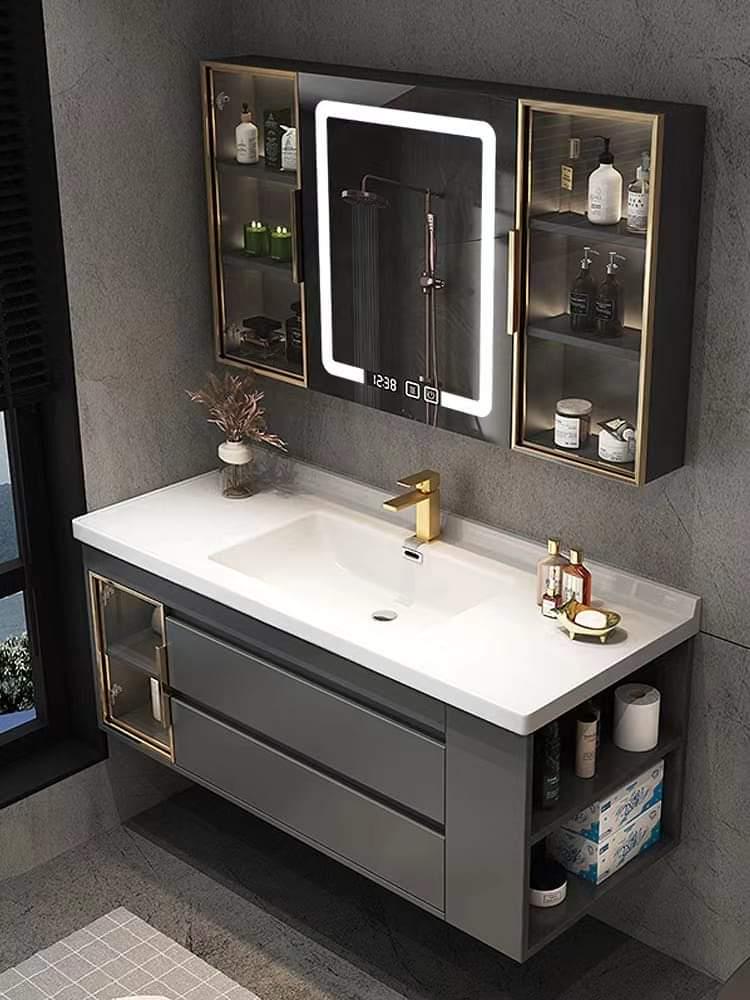
Bathroom vanity buying guide
How to Buy a Bathroom Vanity in Pakistan
A good vanity must fit the room, line up with the plumbing and survive daily splashes. Use this guide to compare size, cabinet material, basin, mirror, storage and installation before ordering.

Founder of Pak Homes · Published August 13, 2026
Before you visit a showroom
Bathroom vanity listings in Pakistan can show similar photographs while including different components. One price may cover the cabinet and basin only; another may include the countertop, mirror, tap or side cabinet. Installation, plumbing changes and delivery may still be separate.
Start with measurements and existing services rather than colour. Record the available wall width, door swing, plumbing points, drain position and nearby electrical fittings. Then ask every supplier for the same written specification and final delivered price.
1. Measure the bathroom and clearances
Measure the wall at floor, counter and mirror height because walls and tiles may not be perfectly square. Record the maximum cabinet width and depth while leaving room for the bathroom door, shower screen, toilet, drawers and cabinet doors to open fully.
Mark the proposed vanity footprint with masking tape. Stand at the basin, open nearby doors and imagine cleaning around it. A deep cabinet can feel comfortable in a large bathroom but obstruct movement in a compact powder room.
2. Choose the correct width and mounting style
Wall-mounted or floating
Keeps the floor visible and easier to clean. The wall and fixings must support the loaded cabinet, basin and countertop.
Floor-standing
Transfers weight to the floor and can offer substantial storage. Check that the base and edges will not sit in standing water.
Single basin
Usually preserves more counter or drawer space and works well where one person uses the bathroom at a time.
Double basin
Needs more wall width, two usable washing positions and carefully planned supply, waste and storage space.
Do not order by a rounded label such as 24-inch or 36-inch alone. Request the cabinet, top and basin dimensions in millimetres or inches, including projections, handles and side overhangs.
3. Map the plumbing before selecting drawers
Photograph and measure the hot and cold supplies, waste outlet and any floor drain. Ask the installer whether the selected vanity can use those points without cutting through a drawer, shelf or structural rail. A beautiful drawer layout loses much of its value if plumbing consumes the storage.
For a replacement vanity, compare the new basin waste position with the old one. Moving concealed pipes, chasing tiled walls or changing the trap can add cost and delay. Agree who supplies the trap, flexible hoses, valves, waste, sealant and any plumbing adapters.
4. Ask what every cabinet part is made from
“Wooden,” “MDF,” “PVC” and “waterproof” are not complete specifications. Ask for the material used in the cabinet carcass, drawer boxes, fronts, back panel and shelves, plus the finish and edge-sealing method. A cabinet can combine several materials.
Plywood
Layered construction can make a strong cabinet, but grade, adhesive, exposed edges and surface finish still determine how well it handles a bathroom.
Moisture-resistant MDF or board
Creates smooth painted or laminated surfaces. Ask whether all cutouts and edges are sealed because exposed board can swell after repeated wetting.
PVC or polymer cabinet
Does not behave like wood-based board around water, but thickness, joints, hinges, heat exposure and overall rigidity still need inspection.
Solid wood
Can be durable and repairable when properly dried, constructed and sealed. Natural timber still moves with moisture and needs suitable finishing and ventilation.
Water-resistant is not the same as waterproof. Even bathroom furniture designed for humid rooms should be ventilated, wiped dry after splashes and protected from leaks or standing water.
5. Compare basin and countertop choices
An integrated basin creates fewer joints and is easy to wipe, while a countertop vessel basin creates a more decorative look but raises the rim and changes tap height. An under-mount basin leaves a clear counter edge but depends on accurate fabrication and support.
Check the usable basin depth, overflow, tap-hole arrangement and waste size. For the top, inspect seams, edge finishing, stain resistance and how it will be sealed to the wall. If the listing says marble or stone, ask whether it is natural stone, engineered stone, porcelain, solid surface or a printed finish.
6. Plan the mirror, lighting and electrical work
Measure from the finished counter to the ceiling and note windows, wall cabinets and lights. Confirm the mirror's exact dimensions rather than judging its scale from a staged image. For an LED mirror, ask about power connection, switch or touch control, colour temperature, demister function, warranty and replacement options.
Electrical work in a wet room needs appropriate placement and protection. Have a qualified local electrician assess the actual location and applicable requirements before wiring an illuminated mirror or nearby socket.
7. Inspect drawers, hinges and practical storage
Open every drawer and door. They should move smoothly, align evenly and avoid the trap and supply lines. Ask whether hinges and runners are soft-close, adjustable and replaceable. Metal fittings should be suitable for a humid bathroom and fixed into material that can hold them securely.
Choose storage for what you actually keep: tall bottles need height, towels need wider dry space, and daily items benefit from shallow drawers. Open shelves look lighter but expose contents to dust and splashes.
8. Clarify what the vanity set includes
A product called a vanity set may include the cabinet, basin and mirror, but not necessarily the tap, waste, trap, side cabinet, LED connection or installation. Request a written component list with the brand or specification of each included fitting.
Ask whether the photograph shows optional accessories or a different width. If colour and stone pattern vary, approve a physical sample or current product photograph before dispatch.
9. Compare the final installed price
Compare quotes on the same width, material, basin, top, mirror, hardware and installation scope. Confirm delivery, upstairs handling, wall reinforcement, drilling, plumbing changes, electrical work, sealant, debris removal and taxes where applicable.
For made-to-order work, put the approved dimensions, colour, material breakdown, components, deposit, production time and remedy for incorrect work on the invoice or order message.
10. Check the vanity at delivery and installation
Before installation, inspect for transport cracks, chipped basin edges, swollen panels, scratches, colour mismatch and missing fittings. Measure the unit and compare it with the approved order. Installation can make later damage claims harder to resolve, so photograph any issue first.
After fitting, check that the vanity is level and firmly supported, drawers clear the plumbing, the basin drains, and every supply and waste connection remains dry. Inspect again after water has run for several minutes. Seal the agreed joints and keep the cabinet dry while sealant cures.
Common vanity-buying mistakes in Pakistan
Buying from the front view only
Depth, drawer travel, door swing, waste position and counter height decide whether the vanity actually works in the room.
Accepting “waterproof” without details
Ask for the exact material, finish, sealed edges, care instructions and written warranty exclusions.
Forgetting the wall structure
A floating vanity needs suitable support and fixings; tile alone is not the structural support.
Comparing incomplete prices
A low cabinet price may exclude the basin, mirror, tap, waste, delivery, plumbing and electrical connection.
Ignoring ventilation and leaks
Persistent humidity, splashes and a slow leak can damage even a well-finished cabinet. Fix leaks quickly and ventilate the room.
Installing before inspection
Check dimensions, finish, basin and mirror before drilling, cutting or sealing the product into place.
Questions to ask the supplier
What exactly is included?
List the cabinet, basin, countertop, mirror, tap, waste, trap, side storage, lighting and installation separately.
What are the exact dimensions?
Request width, depth and height for the cabinet, top, basin and mirror, plus the plumbing cutout positions.
Which materials are used where?
Confirm the carcass, fronts, drawers, back, finish, countertop and basin materials in writing.
What is the final installed price?
Include delivery, carrying, wall mounting, plumbing, electrical connection, fittings and any customization.
A practical final rule
Choose the vanity whose size, materials, components and installation can be verified most clearly—not simply the most impressive photograph. A written specification and measured plumbing plan make the purchase safer.
When you are ready to compare designs, explore the Pak Homes bathroom vanity collection. Open each listing, then contact the listed partner to confirm current pricing, stock, specifications and delivery for your city.
Research notes and sources
The care and installation guidance reflects manufacturer instructions that bathroom cabinets are generally water-resistant rather than waterproof, should be ventilated, kept free of standing water and checked for leaks. See the Estilo vanity installation guide and Geberit's bathroom-furniture care guidance. Product instructions vary, so follow the supplier's own installation and warranty documents for the chosen vanity.